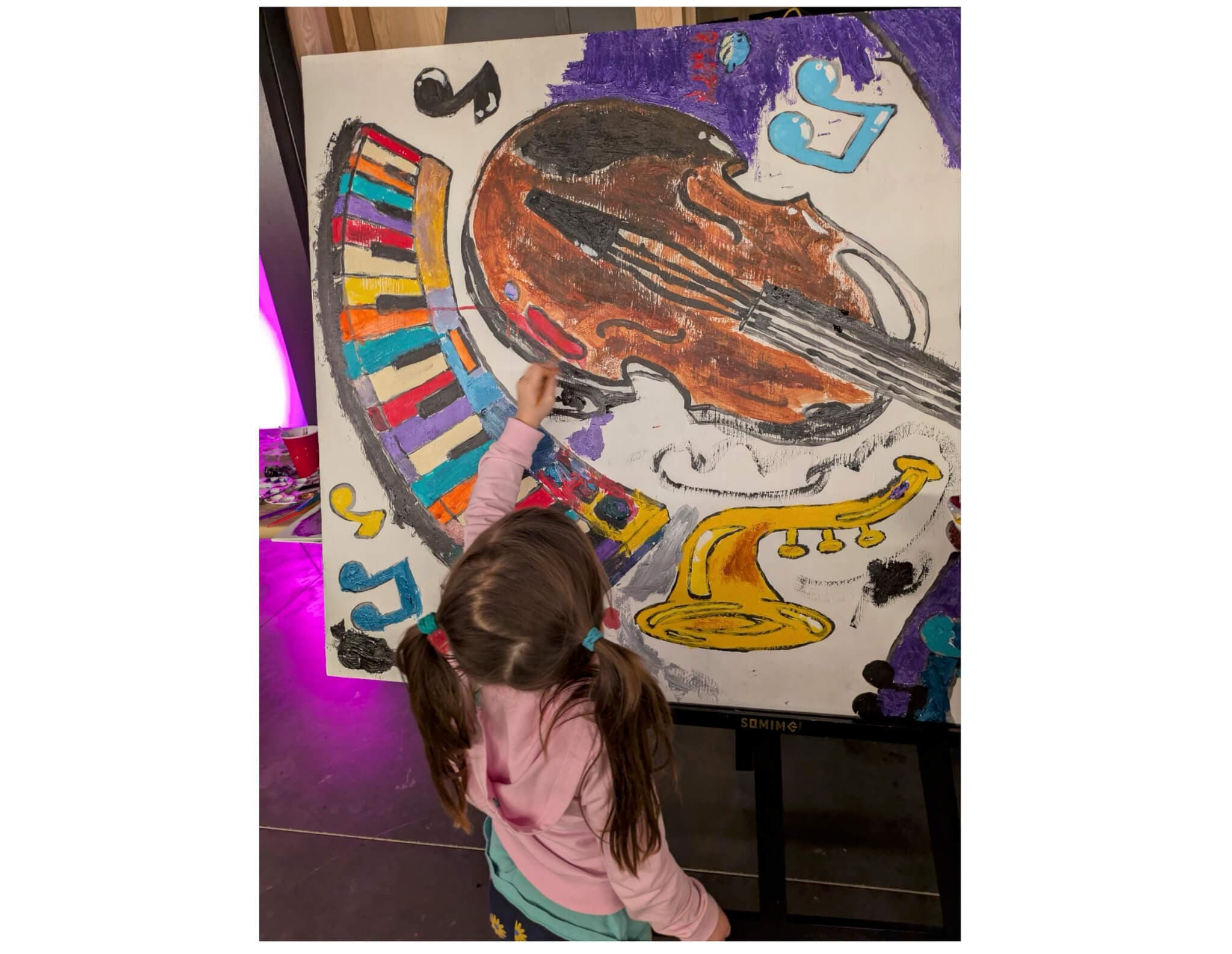
At 8:05 p.m. on a Friday night in November, the Foundry in Cambridge was bustling. The scent of freshly baked banana bread wafted through the lofted space. A ten-year-old and her parents quietly shaped bowls out of clay. A cluster of kids and grown-ups mixed colors and dabbed paint onto a large canvas, which had been outfitted with the outline of a cello.
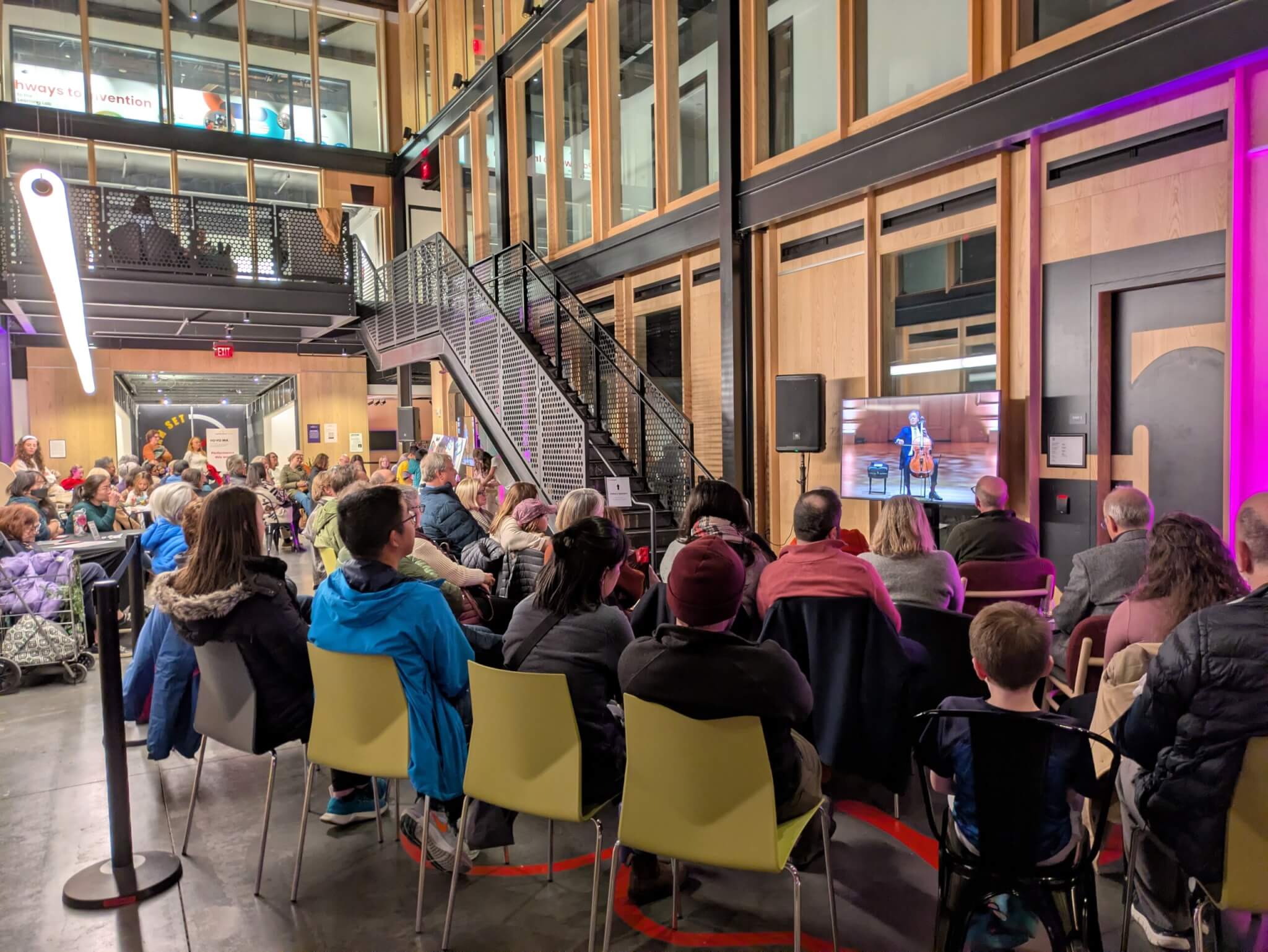
Across the room, chairs were set in semi-circles around two TVs showing Yo-Yo Ma, alone on stage, playing Bach. At a sold-out Symphony Hall in Boston, he was joined by 2,600 people, including one thousand students, first responders, healthcare workers, artists, and arts administrators who received free tickets. Across the Commonwealth of Massachusetts, at twenty-one locations, including libraries and community centers, seven thousand more watched and listened via a simulcast. Titled “We The People: Celebrating Our Shared Humanity,” the performance celebrated not just Yo-Yo Ma’s seventieth birthday and the culmination of his multi-year, thirty-six-site Bach project that generated days of action around the world, but also the upcoming 250th birthday of the United States.
In a time when “we the people” feels frustratingly, calamitously out of reach, the program invited us to imagine the best of what we could become. For me, a musician from the Boston area who has worked in politics and culture at the national and local levels, the concert was a hope-filled demonstration of how the arts can promote collective participation in a culture of democracy.
In Symphony Hall and in community spaces across the state, viewers participated in the event, affirming our shared humanity. We celebrated creativity not just of performers on stage but in ourselves, all around us. We connected across generations. We were buoyed by the kind of civic pride that comes from a renewable source: our faith in ourselves and others.
Ma and his team enabled this by gently, deftly, lovingly overturning notions of what culture is and how art is “supposed” to be experienced. People who have grown up in the traditions of classical music know not to clap between movements, not to exclaim in delight or dismay, not to unwrap cough drops, not to cough. At the Foundry, traditional behavioral expectations that once seemed important faded and new norms were set. The auditorium was at capacity when we arrived, but we pulled up chairs at art tables in the hallway. Laughing and talking punctuated by the occasional errant paper airplanes sometimes covered up the music but didn’t get in the way of our enjoyment. Even the video and audio weren’t synced, prompting my eight-year-old to say, “It’s better if you don’t look at the screen—his bow isn’t going at the right time,” but technical AV precision in a pristine hall wasn’t what we were here for. Music was the reason for gathering. The affirming experience of togetherness was the point.
After the final notes of Bach’s first cello suite, Ma asked the audience to imagine their community twenty-five years into the future, in 2050. He later had people write down their dreams and exchange them with strangers, practicing trust in each other.
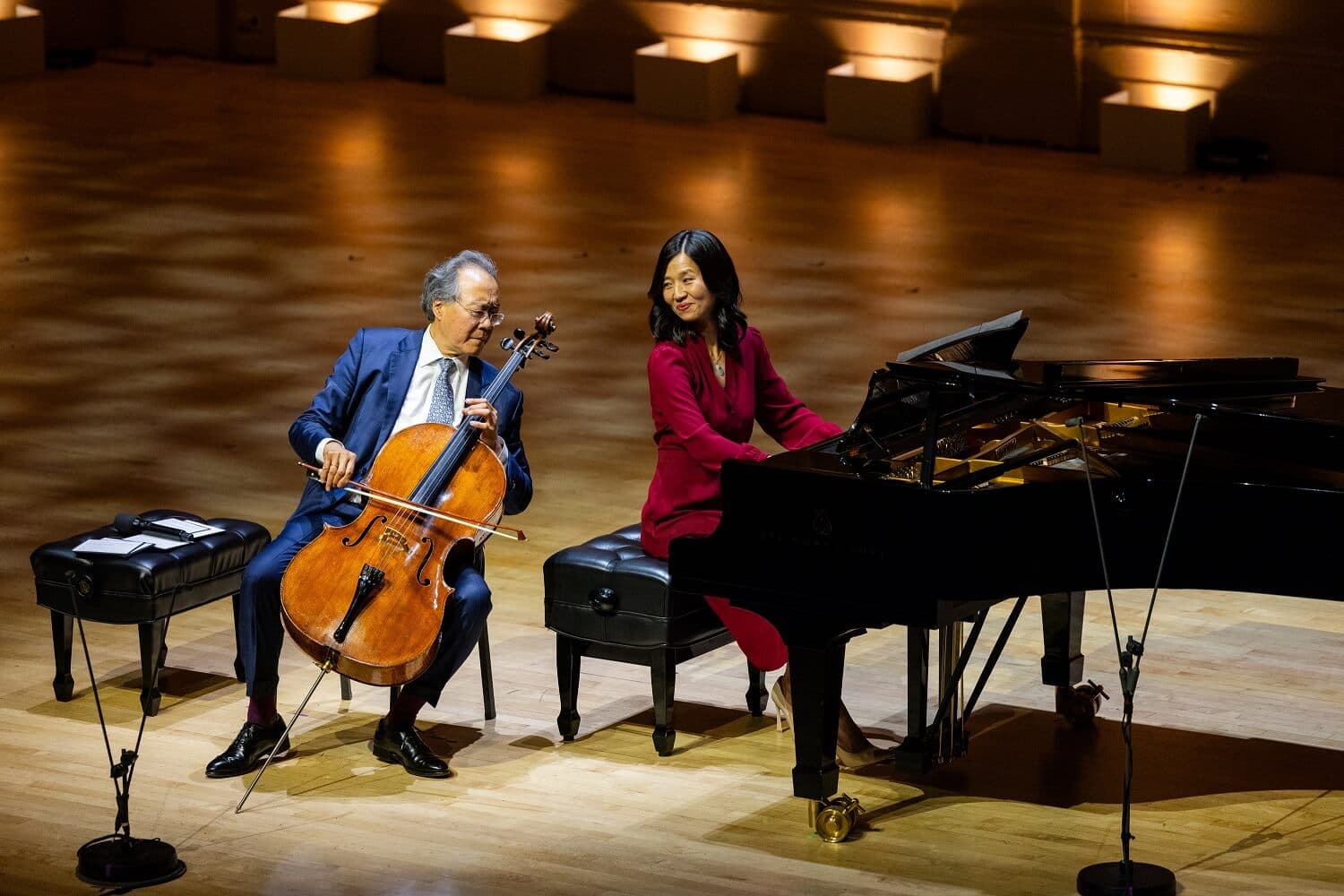
Ma’s surprise guest, Boston’s Mayor Michelle Wu, took the stage at almost 11:30 p.m. to whoops and cheers. She, too, was there to challenge norms. She sat at the piano as a musician and a public servant, expanding her job description by bringing her full self to it, complicating our notions of who elected officials could be and how they should show up. In her duet with Ma, we understood music as service and artistry as leadership.
In an Instagram post from Mayor Wu the day after the program, she wrote, “Music is such a powerful way to share an experience—to feel a sense of our connection, our common dreams, and our common destiny.”
The timing of Ma’s message of community and collective imagination could not be better. In the context of a country roiled by division, the dismantling of democratic cornerstones, and incapacitation of federal cultural institutions, many who work in and care about culture find themselves unmoored. Conversations about the future of the arts are bubbling across the country. Now is the time to find opportunity in destruction and build fresh systems—but what could they look like?
We need to look no further than “We The People” for the seeds of a revitalized vision. Ma and Mayor Wu showed us a path forward for how integration of the arts in our communities can strengthen our collective muscle for civic engagement.
Mayor Wu and Ma used their tools and talents to bring people together. Yes, they are remarkable humans and exemplary practitioners. But all of us have access to the same powers to connect with others through creative expression, and we should draw inspiration from their example. Their creativity was expressed through cello and piano; ours can be through cooking meals, knitting, singing—whatever is authentic and personal. Their venue was Symphony Hall, civic hubs, and community spaces across the state; ours can be living rooms and parks. Their platform came from their roles as public figures; ours can come from our roles as neighbors and citizens.
We the people have powers not just to act as individuals, but to influence the structures we rely on collectively. We can encourage our cultural institutions to experiment with the ways they bring people together around art, as Ma and every participating venue did. We can require our public leaders to support these activities through policies that make both the process and the product of art-making accessible and affordable. And we can celebrate the thousands of people—the artists, arts workers, small business owners, and community members—who make it their life’s labor to design and produce cultural programs.
At the Foundry, kids and grown-ups listened all together. Neighbors met for the first time and exchanged phone numbers. Newly acquainted five-year-olds twirled with silk scarves. On social media, I saw similar versions of this scene in libraries, community centers, shelters, and hospitals across the state. If we understand democracy as the process of building our future together by listening, chatting, creating, and being together, we can practice a culture of democracy and exercise our muscles of engaged citizenship. And if we are open to understanding ourselves as “The People,” stewards of each other’s dreams in addition to our own, seeds that will flourish in twenty-five, fifty, or 250 years just might begin to grow.